
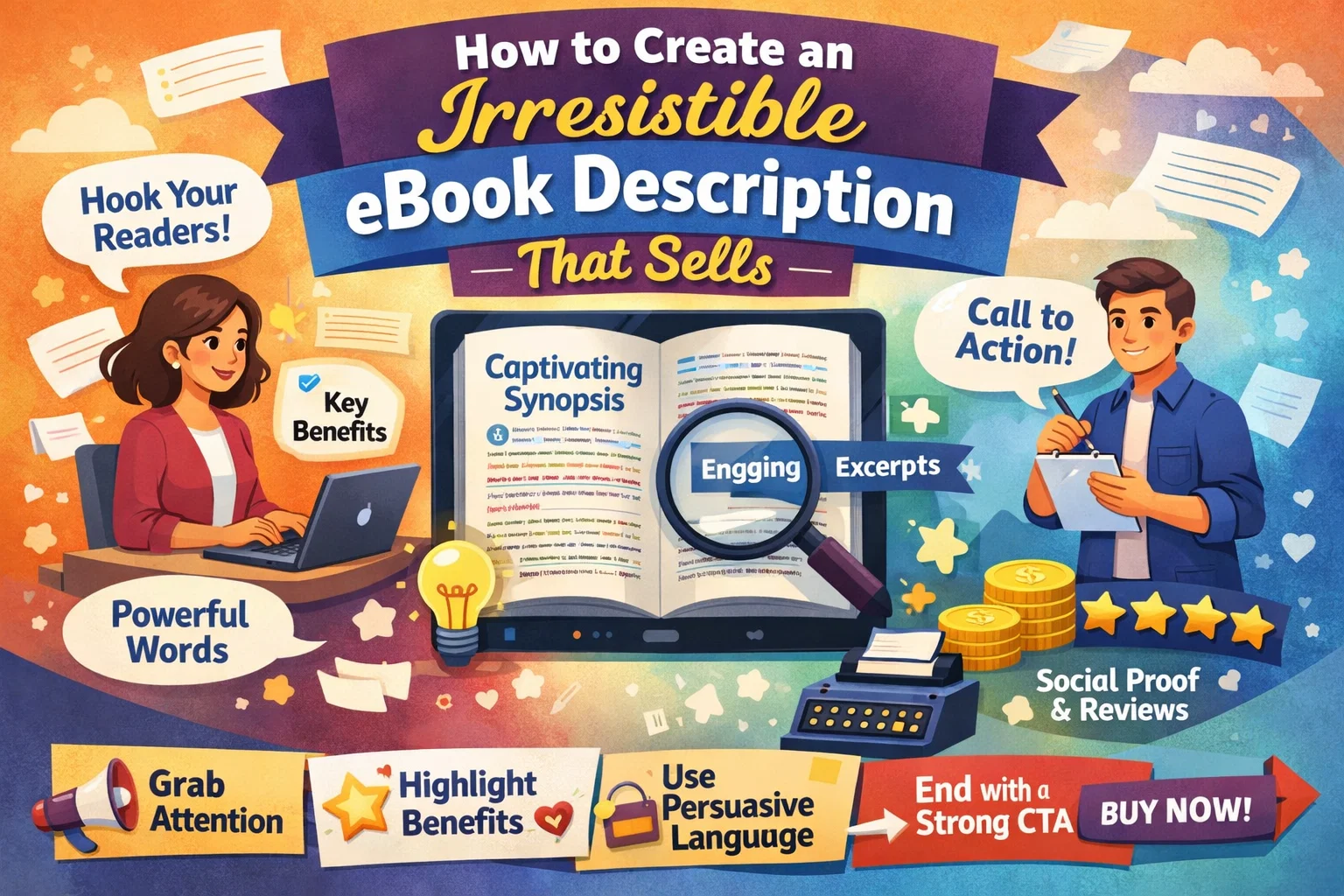
An irresistible eBook description is a critical part of your book’s success on Amazon, Apple Books, Barnes & Noble, and other online platforms. It’s the first thing potential readers see before they decide to purchase your book. If your description doesn’t grab their attention, they’ll move on to the next option—no matter how great your book might be.
In this blog, we’ll show you how to craft an eBook description that not only captures attention but also drives sales. We’ll explore key strategies to write a compelling description, how to appeal to your target readers, and how to optimize it for Amazon’s algorithm to boost discoverability.
1. Start with a Hook
Your eBook description should start with a strong hook—the part that immediately grabs the reader’s attention. This hook sets the tone for the rest of the description and makes them want to keep reading.
A great hook:
- Piques curiosity
- Presents a problem the reader wants solved
- Intrigues with a question or statement that makes the reader think
Example:
“Are you ready to embark on a thrilling adventure that will change your life forever? This gripping novel is not just a story, but a journey you won’t forget.”
Tip: Don’t just introduce your book here—focus on engaging the reader with emotion or intrigue.
2. Introduce the Core Concept of Your Book
Once you’ve grabbed their attention, you need to introduce the core concept of your eBook. This is where you give the reader an idea of what your book is about, without giving away too much.
Focus on the key themes, central conflict, or main idea. Be clear and concise.
Example:
“In this action-packed thriller, an ordinary man is pulled into a web of conspiracy, where nothing is what it seems, and every decision could mean life or death.”
Tip: Don’t overcomplicate things. Readers should know exactly what to expect from your book within the first few lines.
3. Highlight the Benefits to the Reader
The goal of an eBook description is not just to explain the plot—it’s to convince readers why they should spend time and money on your book. Highlight the benefits and the value they will gain by reading it.
Ask yourself: What makes this book different from others? Why should they care? What emotions will the book evoke? How will it transform the reader’s life?
Example:
“From the first page to the last, you’ll be captivated by the twists and turns, constantly questioning who you can trust. Perfect for fans of suspense, this book will keep you on the edge of your seat until the very end.”
Tip: Focus on how reading your book will make them feel or what it will add to their life. Emphasize experience over details.
4. Use Specifics to Build Credibility
Readers want to know they are making the right choice. To build credibility, use specifics that give insight into the quality of your book. These specifics could be:
- Awards you’ve won
- Genres it fits into
- Themes that resonate with the target audience
- Praise or endorsements from reputable sources
- Testimonials or quotes from advanced readers
Example:
“Winner of the 2021 Mystery Writers’ Association Award, this novel has received glowing reviews from critics and readers alike.”
Tip: Avoid generic claims like “Best book you’ll ever read.” Instead, back up your description with real evidence and specifics.
5. Include a Call to Action (CTA)
Your eBook description is a sales pitch, so don’t forget to include a clear Call to Action (CTA) at the end. A CTA tells the reader what to do next—buy your book.
A strong CTA could be:
- “Grab your copy today!”
- “Start reading now for the ultimate thrill ride.”
- “Find out what happens next—click below to get your copy!”
Example:
“Ready to discover the truth? Don’t wait—click below to get started on your next unforgettable adventure.”
Tip: Keep your CTA simple and action-oriented. Avoid being too pushy, but encourage readers to take immediate action.
6. Optimize for Amazon’s Algorithm (SEO)
To make your book discoverable on platforms like Amazon, you need to ensure your description is optimized for search. This is where SEO comes into play.
- Keywords: Use keywords that match what potential readers are searching for. For instance, if your book is a romantic suspense novel, include words like “romantic thriller,” “suspense,” or “romantic mystery.”
- Relevant Phrases: Incorporate keywords in a natural way—don’t just stuff them in for SEO. They should blend smoothly into the description.
Tip: Research keywords that are highly searched and low competition in your genre to ensure your book appears in relevant searches.
7. Keep It Concise and Scannable
Your eBook description should be easy to read, and most importantly, it should be scannable. Readers tend to scan descriptions quickly, so make sure the text is broken up into short paragraphs with headings or bullet points.
Tip: Make your description short enough to keep readers engaged, but long enough to provide enough information. Aim for 150-300 words, depending on the complexity of your book.
8. Use Emotional Language
Appeal to your reader’s emotions. Emotional hooks create connections that drive action. Think about the feeling you want readers to have when they finish reading your description. Should they feel curious, excited, sad, or empowered?
Use emotional language that aligns with the tone of your book. If your book is a romance, you may want to use words like heartwarming, passionate, and romantic. If it’s a thriller, focus on words like gripping, suspenseful, and mind-bending.
9. Highlight the Main Characters
If your book has memorable or compelling main characters, don’t hesitate to mention them in your description. Readers love to connect with characters, especially in genres like fiction, romance, and thriller.
Provide just a hint of what makes the main characters interesting, but avoid giving away too much information.
Example:
“John, a once-successful lawyer turned private investigator, now finds himself chasing down a ruthless criminal with nothing but his wits and his haunted past.”
Tip: Make the reader want to follow your characters. Highlight their journey without spoiling the entire plot.
10. Test Your Description on Different Platforms
Once you’ve written your description, test it out. A strong eBook description should perform well across platforms, but every platform has slightly different best practices for formatting, length, and style.
- Amazon: Keep your description clear and concise, as it often appears in a preview section.
- Apple Books: Descriptions here are often more concise but focus heavily on compelling language.
- Goodreads: You may want to include more detail about the book’s journey or background for readers on this platform.
Make sure to test your description to see what works best for each platform!
Conclusion
An irresistible eBook description is a game-changer when it comes to attracting readers and boosting sales. A great description doesn’t just summarize the book—it hooks the reader, builds excitement, and convinces them to take action.
At Book Planets, we specialize in writing compelling eBook descriptions that capture attention, convert readers, and drive sales. Whether you need help crafting a description or optimizing your book for Amazon KDP, we’re here to help you succeed.
Frequently Asked Questions (FAQs)
1. How long should an eBook description be?
The ideal length is typically between 150 to 300 words, depending on the complexity of your book. Keep it concise but engaging.
2. What should I focus on in my eBook description?
Start with a hook, introduce your book’s core concept, highlight key benefits for the reader, and include a strong call to action (CTA).
3. Should I include keywords in my eBook description?
Yes! Use relevant keywords naturally to help with discoverability. But avoid keyword stuffing.
4. How can I make my eBook description stand out on Amazon?
Focus on a compelling hook, maintain a clear structure, and make sure it’s emotionally engaging. Proper formatting and keyword usage also help.
5. Can I update my eBook description after publishing?
Yes. Amazon allows you to update your description anytime, so make sure to track your book’s performance and adjust accordingly.