
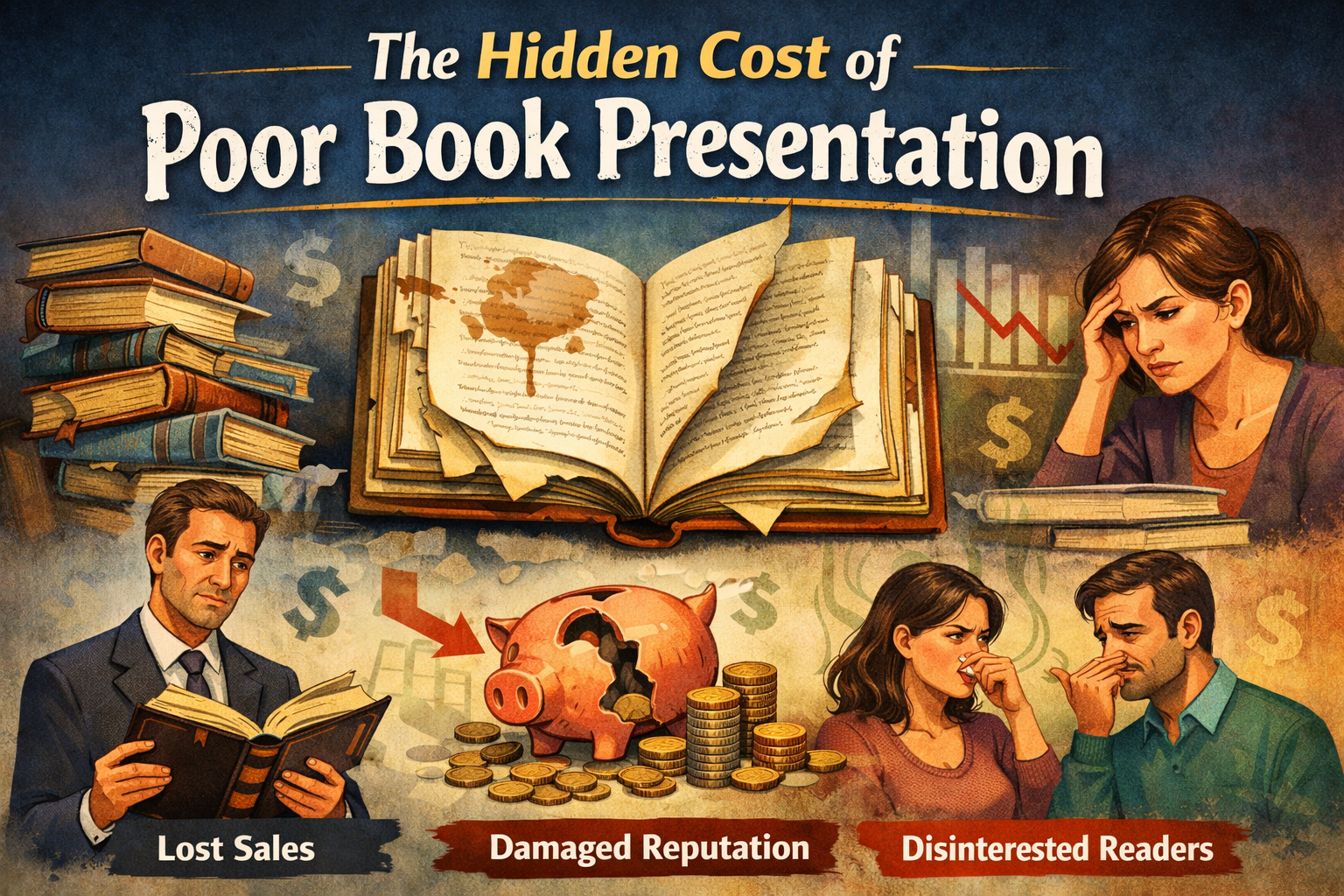
When authors think about why books succeed or fail, they usually point to writing quality, genre choice, or marketing. While those factors matter, there’s a quieter issue that damages more books than most writers realize: poor book presentation. It doesn’t announce itself loudly. It doesn’t always trigger immediate complaints. But over time, it quietly drains sales, credibility, and reader trust.
Book presentation is everything readers experience visually before and during reading—layout, formatting, typography, spacing, structure, and overall polish. When it’s done right, readers barely notice it. When it’s done wrong, readers feel it immediately, even if they can’t explain why.
This article explores the hidden costs of poor book presentation, why it impacts reader behavior more than authors expect, and how it affects long-term success in today’s publishing landscape.
What Book Presentation Really Means
Book presentation is not just about aesthetics. It’s about usability, comfort, and trust.
Good presentation ensures:
- Text is easy to read for long periods
- Navigation feels intuitive
- Chapters flow naturally
- Pages don’t feel crowded or chaotic
- The book feels professionally produced
Poor presentation, on the other hand, introduces friction. Even small issues—awkward spacing, inconsistent formatting, cluttered pages—add mental effort for the reader. Over time, that effort becomes fatigue, and fatigue leads to abandonment.
First Impressions Happen Before the First Sentence
Readers form opinions about a book before they read a single line. The moment they open the file or flip the first page, they subconsciously assess:
- Does this feel professional?
- Does this look trustworthy?
- Is this going to be comfortable to read?
If the answer to any of those questions is “no,” readers hesitate. And hesitation is dangerous in a market where alternatives are unlimited.
Poor presentation creates doubt before the story even has a chance to speak.
The Cost Most Authors Never Track: Reader Drop-Off
One of the biggest hidden costs of poor book presentation is early reader drop-off.
When formatting is uncomfortable or distracting, readers quit earlier. They may never complain. They may never leave a review. They simply stop reading.
This affects:
- Completion rates
- Engagement signals on digital platforms
- Word-of-mouth recommendations
- Long-term sales
From the author’s perspective, the book “didn’t perform.” From the reader’s perspective, the book “wasn’t enjoyable to read”—even if the story itself was strong.
Poor Presentation Undermines Good Writing
Even excellent writing struggles when wrapped in poor presentation.
Long blocks of unbroken text, inconsistent paragraph spacing, awkward line breaks, or poorly structured chapters interrupt rhythm and immersion. Readers spend mental energy navigating the page instead of engaging with the content.
Over time, they associate that discomfort with the writing itself, even if the real problem is visual structure, not storytelling.
This is one of the most frustrating outcomes for authors: strong content weakened by avoidable presentation issues.
Formatting Errors Quietly Damage Reviews
Many negative reviews don’t mention formatting directly, but the clues are there:
- “Hard to get into”
- “Didn’t hold my attention”
- “Felt amateur”
- “Something was off”
These reactions often stem from presentation problems rather than plot or prose. Dense pages, poor typography, and weak layout all contribute to negative emotional responses that readers express indirectly.
Once reviews trend negative—even subtly—future readers hesitate, and algorithms respond accordingly.
Professionalism Is Communicated Visually First
In publishing, professionalism is communicated visually before it’s communicated intellectually.
Readers assume:
- Clean layout = care and effort
- Consistent structure = competence
- Polished presentation = credibility
Poor presentation sends the opposite message. It suggests shortcuts, inexperience, or lack of attention to detail. That perception is difficult to reverse once formed.
For authors trying to build a long-term writing career or personal brand, this silent credibility loss can be devastating.
The Algorithmic Cost of Poor Presentation
Digital platforms evaluate books partly through reader behavior. While platforms don’t openly explain every ranking factor, engagement matters.
Books with poor presentation often experience:
- Shorter reading sessions
- Higher abandonment rates
- Fewer completions
- Lower retention
These signals reduce visibility over time. A book may launch fine but slowly disappear from recommendations, not because it lacks merit, but because readers aren’t staying with it long enough.
Presentation issues quietly sabotage discoverability.
Why Readers Blame the Book, Not the Layout
Readers rarely say, “This book needs better formatting.” Instead, they say:
- “I couldn’t get into it”
- “It felt exhausting”
- “It didn’t click”
Readers don’t separate content from presentation. To them, the book is one unified experience. When presentation causes discomfort, the book takes the blame.
This is why presentation issues are so dangerous—they’re invisible in diagnosis but obvious in effect.
Print and Digital Presentation Failures Cost Differently
In print, poor presentation leads to:
- Eye strain
- Uncomfortable reading flow
- Reduced rereadability
- Negative in-person impressions
In digital formats, the cost is even higher:
- Device incompatibility
- Broken navigation
- Inconsistent display across screens
- Frustration amplified by choice overload
Digital readers abandon faster because leaving is effortless. Presentation mistakes are punished more quickly and more quietly.
Poor Presentation Weakens Brand Authority
Authors aren’t just selling books—they’re building trust. Every book contributes to or detracts from that trust.
Poor presentation affects:
- Author reputation
- Future release performance
- Reader loyalty
- Perceived value of the author’s work
Once readers associate an author with uncomfortable reading experiences, they hesitate to return—even if future books improve.
Presentation mistakes linger longer than most authors expect.
Why “Good Enough” Is Rarely Good Enough
Many authors aim for “acceptable” presentation. Unfortunately, readers don’t compare books to acceptable standards—they compare them to the best experiences they’ve had recently.
When readers regularly encounter clean, well-structured books, anything below that standard feels subpar. “Good enough” presentation now feels outdated.
The publishing landscape has raised the baseline, and readers expect professionalism by default.
Presentation Is Part of the Storytelling
Good presentation supports storytelling. It controls pacing, guides emotion, and shapes how readers experience scenes.
Strategic spacing can:
- Slow readers during emotional moments
- Speed them up during action
- Emphasize dialogue
- Improve narrative flow
Poor presentation flattens these effects. Everything feels the same, emotionally and visually. The story loses texture.
Presentation is not separate from storytelling—it’s one of its tools.
The Long-Term Cost: Lost Opportunities
Poor book presentation doesn’t just affect one book. It affects:
- Series potential
- Recommendations from readers
- Opportunities for collaborations
- Media or professional interest
A book that feels amateur visually rarely opens doors, no matter how strong the idea behind it is.
This long-term opportunity loss is one of the most expensive hidden costs of all.
Fixing Presentation Is Often Easier Than Rewriting
The good news is that presentation problems are often easier to fix than content problems.
Improving layout, formatting, and structure can dramatically improve reader experience without rewriting a single chapter. Many books don’t need new stories—they need clearer delivery.
This is why professional presentation review is often one of the highest-impact improvements an author can make.
Conclusion
Poor book presentation rarely fails loudly. It fails quietly—through disengagement, hesitation, and lost trust. It undermines good writing, weakens reviews, suppresses visibility, and damages credibility over time.
In today’s competitive publishing environment, presentation is not optional. It’s part of the reading experience, part of the author brand, and part of long-term success.
At Book Planets, we regularly see books transformed—not by changing the story, but by improving how that story is presented. When presentation aligns with content, readers stay longer, trust more deeply, and engage more fully.
Frequently Asked Questions
1. What is book presentation exactly?
Book presentation includes formatting, layout, typography, spacing, structure, and overall visual readability of a book.
2. Can poor presentation really affect sales?
Yes. Poor presentation leads to early reader drop-off, weaker reviews, and reduced visibility, all of which impact sales.
3. Do readers notice formatting issues?
Readers feel formatting issues immediately, even if they don’t consciously identify them as formatting problems.
4. Is presentation more important for eBooks than print books?
Both matter, but digital readers abandon books faster, making presentation especially critical for eBooks.
5. Can great writing overcome bad presentation?
Rarely. Even strong writing struggles when readers feel discomfort while reading.
6. How does presentation affect reader trust?
Professional presentation signals care and credibility, while poor presentation creates doubt about quality.
7. Are negative reviews always about writing quality?
No. Many negative reactions stem from presentation issues that readers describe indirectly.
8. Does presentation impact long-term author branding?
Yes. Readers associate presentation quality with the author, affecting future book performance.
9. Is fixing presentation expensive?
Not compared to rewriting or relaunching. Presentation improvements often deliver high return on effort.
10. When should authors focus on presentation?
Before publishing. Fixing presentation early prevents long-term damage to reviews, visibility, and trust.